

Flowers, Language, Horizons: Zaatari Camp, Jordan
A mother’s love and lessons from inside the camp walls, captured in everyday moments

In Za’atari Refugee Camp, daily life is shaped by limits—of space, resources, and opportunity. For Ataa, a mother and head of her household, each day is a careful balance of care, education, and protection. Through her eyes, and in the photographs she shares, we glimpse the small yet profound ways she nurtures her children, teaches them skills, and preserves moments of joy and hope. These images capture childhood, resilience, love, and the quiet strength of women leading families alone in displacement.
The Flowers in Her Caravan
Ataa’s home is both a shelter and a classroom. By keeping her children close, teaching them, and creating safe spaces to play, she demonstrates the dual role of caregiver and protector that many female heads of households must assume in the camp.
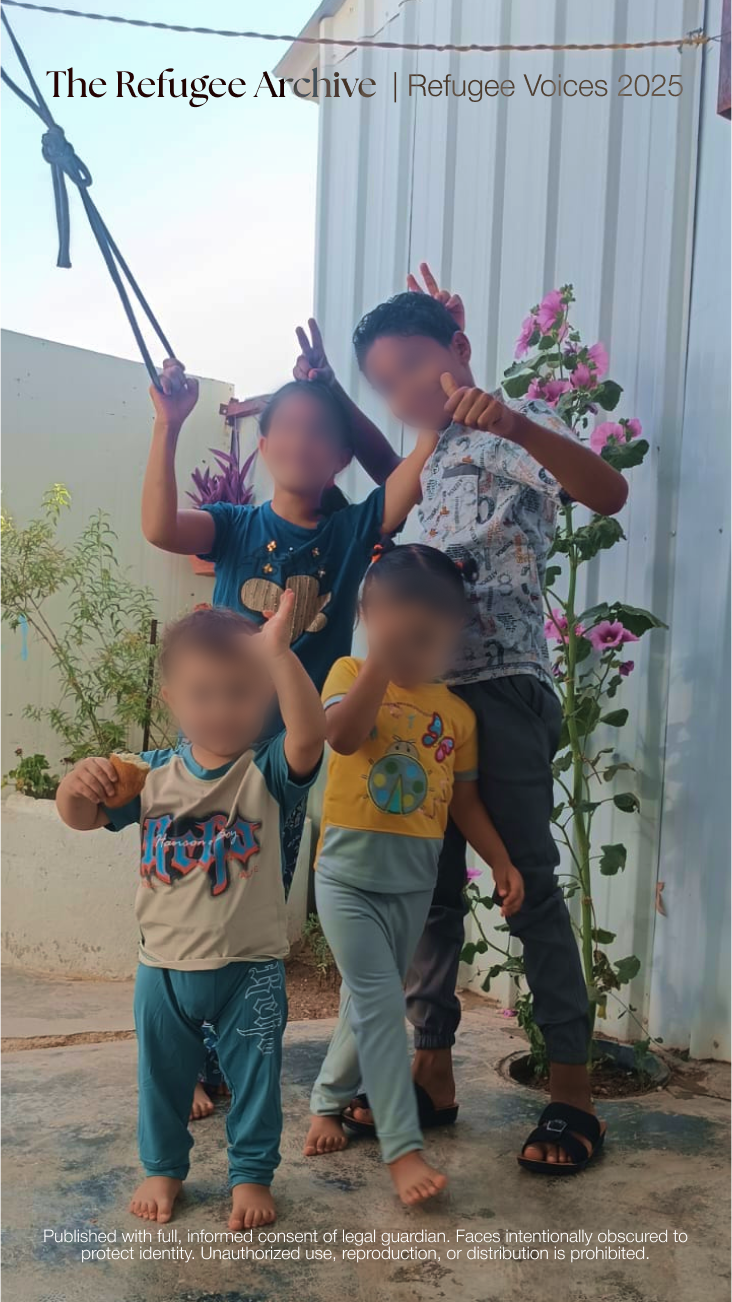
“This is inside my house last year. I love flowers and greenery, so I planted flowers inside. This space is open from above, but completely covered from the sides—no one can see us. I use it for many things: cleaning, preparing large meals, or as a safe place for my kids to play. I don’t like them going out into the streets, so even though the space is small, they can enjoy it here.
We dug into the ground and placed a small bottle filled with soil so I could plant flowers. I used to have many more flowers on the other side, but we removed them to make more space for the kitchen. Every family in the camp changes their space depending on their needs. I don’t have much space, so I had to reduce the play area, but it’s still useful.
Even though we’re in a camp, I try to keep everything clean and organized. I want my children to always be clean, special, and prepared for life. I want them to survive on their own in the future, so I started teaching my two oldest whenever I have time. I teach them English, mathematics, Arabic grammar, Islamic verses, and the Qur’an.”-Ataa
Building Futures from Home
English is a lifeline in a world where displacement limits access to resources and opportunities. Ataa’s lessons ensure her children are not left behind, reflecting how refugee women often use education to safeguard their family’s future.


“In the camp, not many people speak English. Most children can’t understand it because their parents don’t know English either, and you can’t depend entirely on the schools here. That’s why I want my kids to learn from me first.
My second daughter can already speak and introduce herself in English. She understands basic sentences. My oldest son can too. My younger daughter and third child, is in kindergarten, so I’m teaching her the alphabet, small songs, and Qur’an verses.
And then there’s the youngest—he loves making us laugh. He puts on little shows, and we all enjoy them. He knows he makes us happy, so he does it even more. He’s laughing right now because he knows I’m talking about him.
As for my third child’s singing—it’s so beautiful and funny. I swear, whenever I hear her voice, no matter how sad I am, I instantly feel happy.”
-Ataa
For children growing up in Za’atari, every day is a mixture of routine and uncertainty. Ataa’s photos allow her children to see themselves not just as camp residents, but as children with curiosity, friends, and dreams that reach beyond their current world.
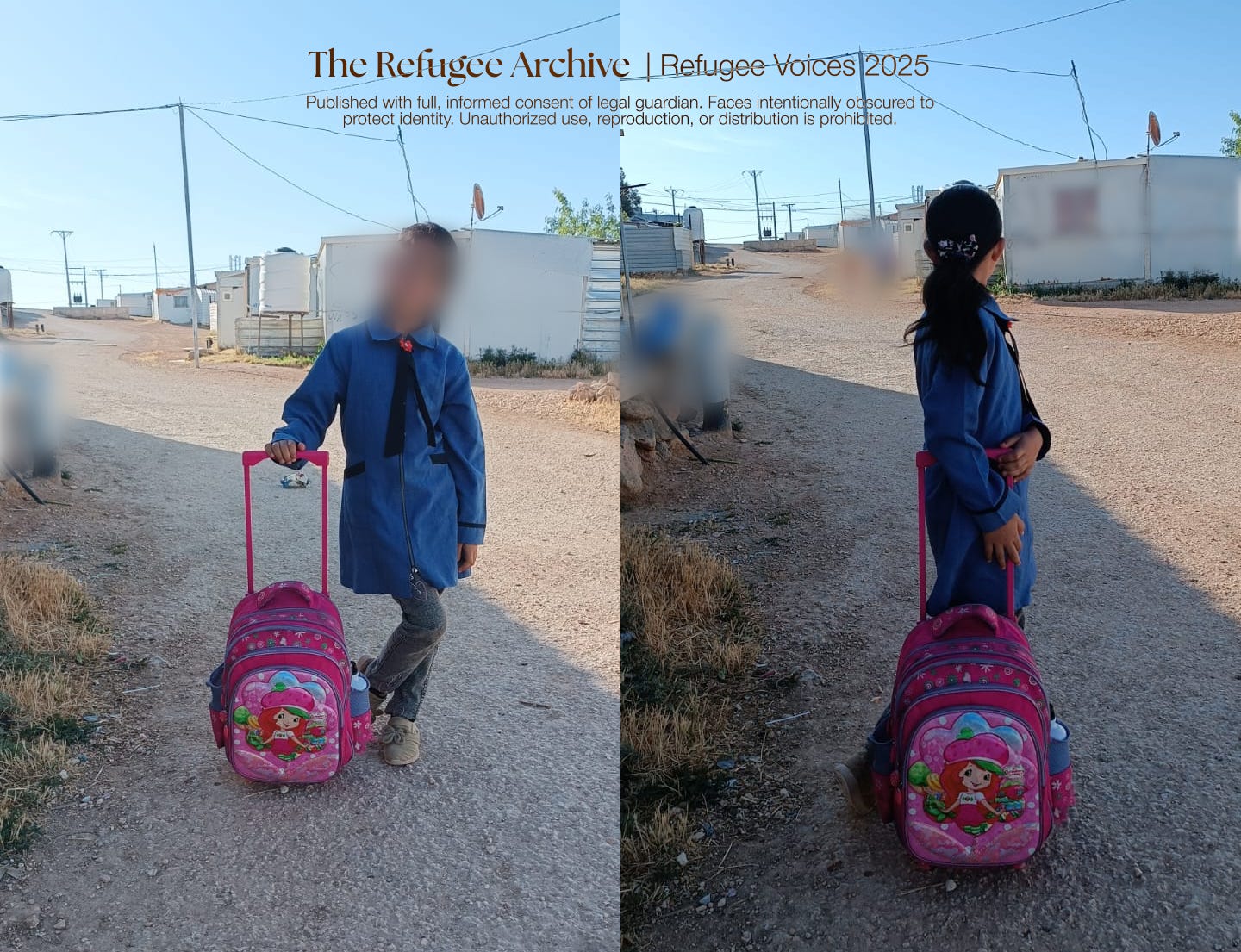
“This is my 2nd child before school. I always try to take many photos of my children so that when they’re older, they can look back and see themselves as they were.
Maybe one day we’ll leave this camp, and all of this will just be a memory. At least then, we’ll have something to look at—something to remind us of these days.
In this picture, she’s waiting for her friends, and it almost looks like she’s gazing out over the camp. We have a beautiful view here, and it feels as if she’s looking toward the future.”-Ataa
Trip to Amman
Even brief trips outside the camp become extraordinary for Ataa and her children.
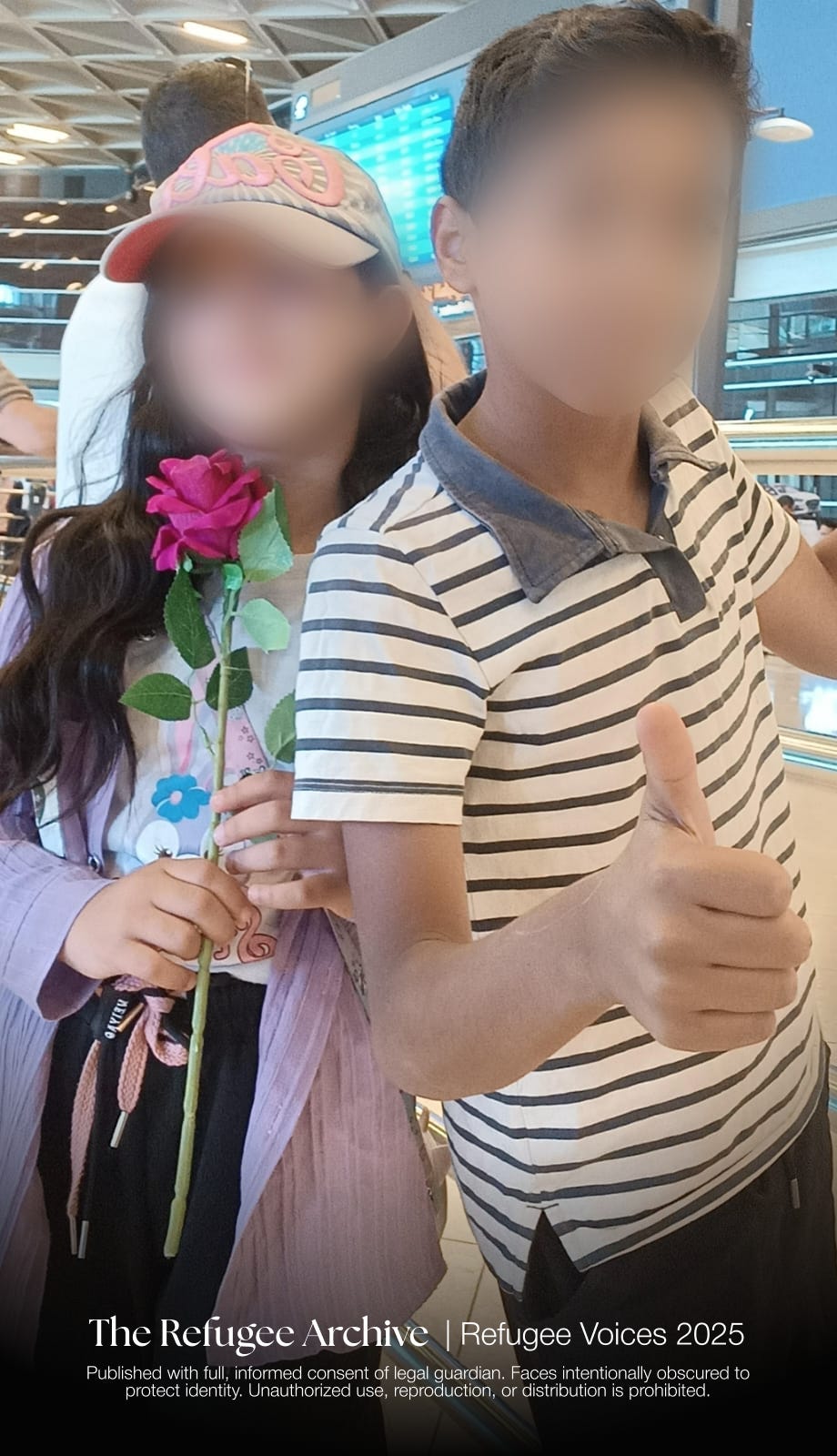
“This is a very unique picture because we weren’t in the camp. I took them with me to visit Amman outside the camp—I really wanted them to see life beyond its borders. I brought my two oldest with me and left my two youngest children with a friend in the camp.
The flower in the photo isn’t real, but Shatha wanted it. I gave it to her because she liked it. It may not be real, but it’s still beautiful—because she loved it.”-Ataa
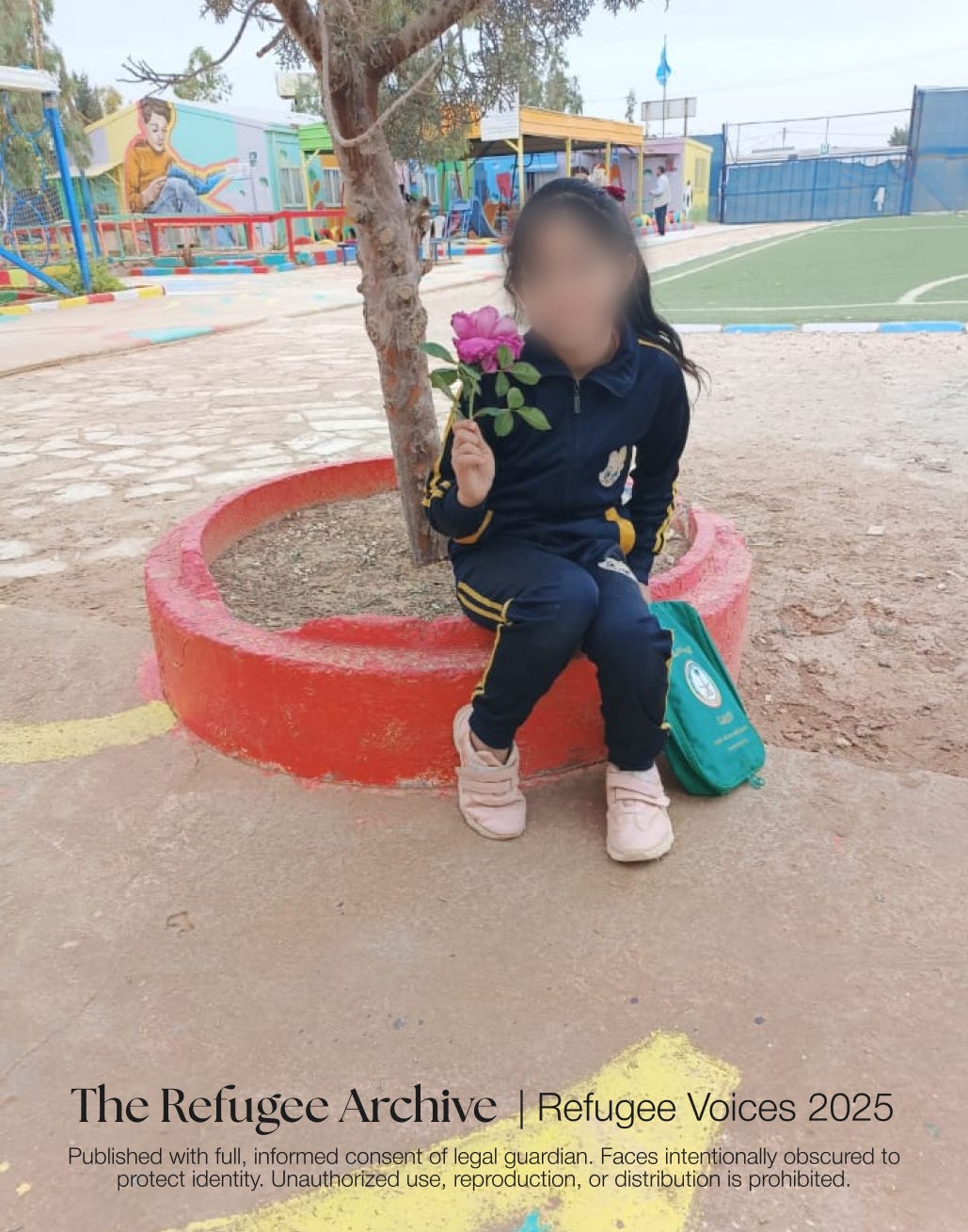
“Here in the camp, as you can see, my daughter loves flowers.
This picture was taken inside the camp, but not at her school—it was at another UNICEF center. These centers teach children skills and give them a place to spend time for entertainment, not just for learning. They play, they draw, and sometimes they even go to the small cinema in the camp. It’s not a big cinema, but it’s something special for them.
The children love these centers because they can play more freely than they can at school. They still learn, but in a way that feels fun—through games, art, and new skills.
This particular center was close to our house, but unfortunately, it was removed almost a year ago when they reduced the number of centers in the camp. So this picture is from about a year ago.”-Ataa
Even in the small corners of the camp, Ataa notices what brings her children joy—like her daughter’s love of flowers. Places to play, learn, and laugh may be few, but she makes each moment count.
Through everyday lessons, laughter, and care, Ataa shows the quiet strength of women leading households alone in displacement. These photos are more than memories—they’re proof of resilience, love, and hope.
These are the behind-the-scenes of Ataa’s four-part series on The Archive Speaks. Take a listen and learn more beyond her lenses.