

World Refugee Day | June 20, 2025
"The Day We Left Everything but Each Other"

“I packed a single meal, the only ID card I had left, and a phone with a cracked screen. My daughter never got a birth certificate, she was born at home, during a curfew. No paper proves she exists. My husband was arrested at a checkpoint a year ago. I haven’t heard from him since. So I carried what I could, my child and our names.”
— Amal, a mother of one, living in a tented settlement
Today, on World Refugee Day, the UNHCR reports that 122 million people are displaced worldwide. Nearly half of them are children. And behind so many of those children is a woman alone, a mother, a sister, a grandmother, leading a household in the absence of a traditional family structure, tasked not just with survival, but with building new lives from the rubble of the old.
Yet these women—Female-Headed Households (FHHs)—remain underrepresented in global policy, media, and scholarship. They are often invisible in statistics. But they are the anchors of resilience and recovery. They are navigating bureaucracies, raising children in exile, negotiating daily safety and dignity, and doing it all in contexts not built for them.
Introducing The Refugee Archive
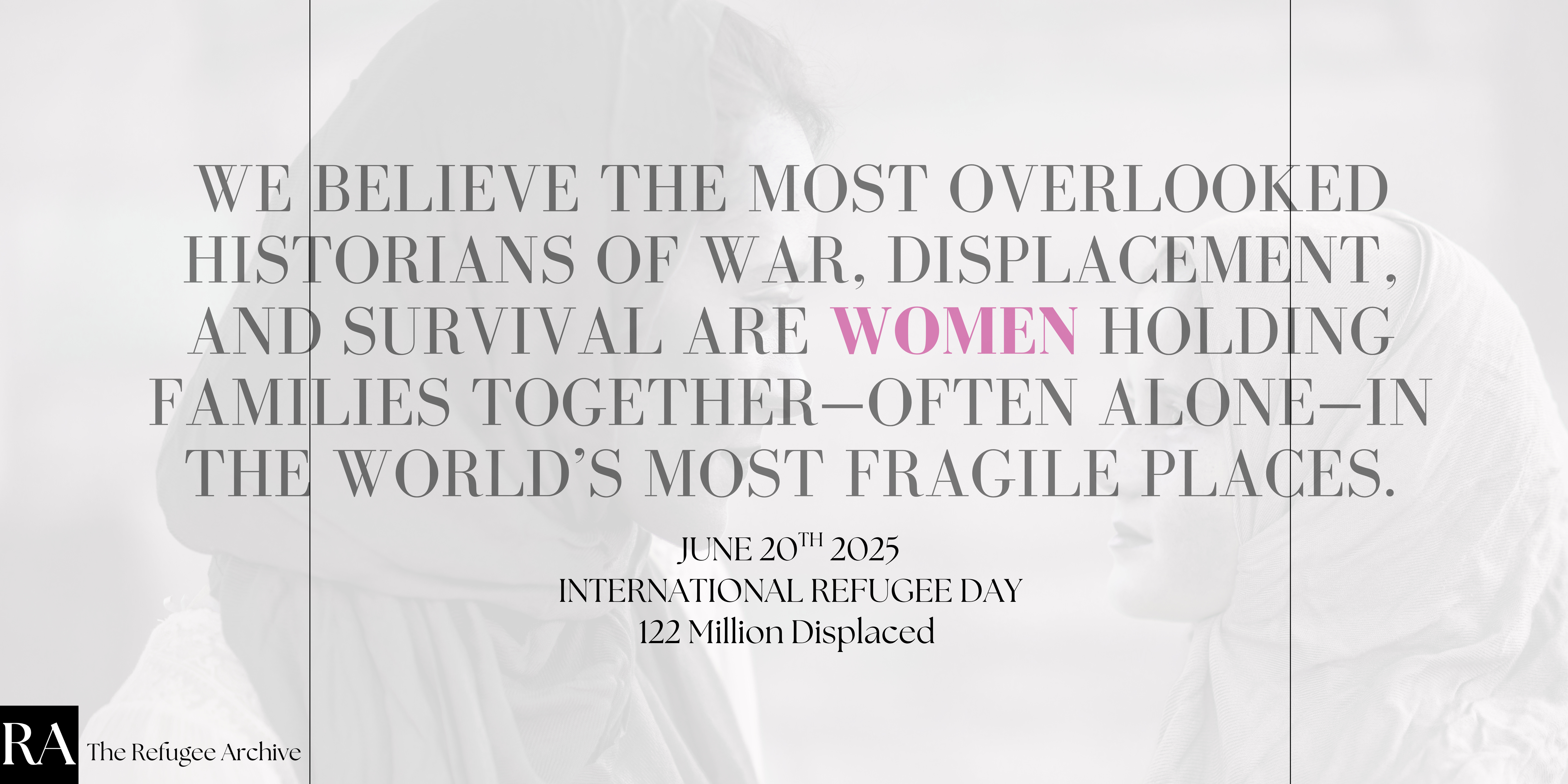
The Refugee Archive is a living, growing digital collection of interviews and oral histories focused exclusively on female-headed households navigating displacement. We believe the most overlooked historians of war, displacement, and survival are women holding families together, often alone, in the world’s most fragile places.
Born from doctoral research and now powered by international development professionals, academic scholars, and refugee women themselves, this project is a multi-platform archive and advocacy initiative. Through podcasts, newsletters, and open-access oral history tools, we will center the voices of FHHs as narrators of their own experience, not passive subjects, but agents of memory and meaning.
Where We Are Now
The Refugee Archive is in its foundational phase. We are actively building the architecture of something lasting and ethical, a living digital repository dedicated to the stories of female-headed households navigating displacement.
Behind the scenes, our team is finalizing a comprehensive Code of Ethics grounded in international oral history and human rights standards. We are shaping rigorous protocols for data stewardship, consent and permissions, and participant agency.
We are developing curated frameworks for podcast production, open-access storytelling tools, and visual archives.
And we are establishing a global network of partners, researchers, designers, and refugee narrators who believe, as we do, that the margins hold the memory.
If you are working at the intersection of forced migration, storytelling, oral history, gender, or digital humanities, if you are part of an organization that preserves lived experience or challenges dominant narratives, or if you are a refugee woman, scholar, artist, or advocate with a vision for this work— we want to hear from you.
